

Back on four legs.
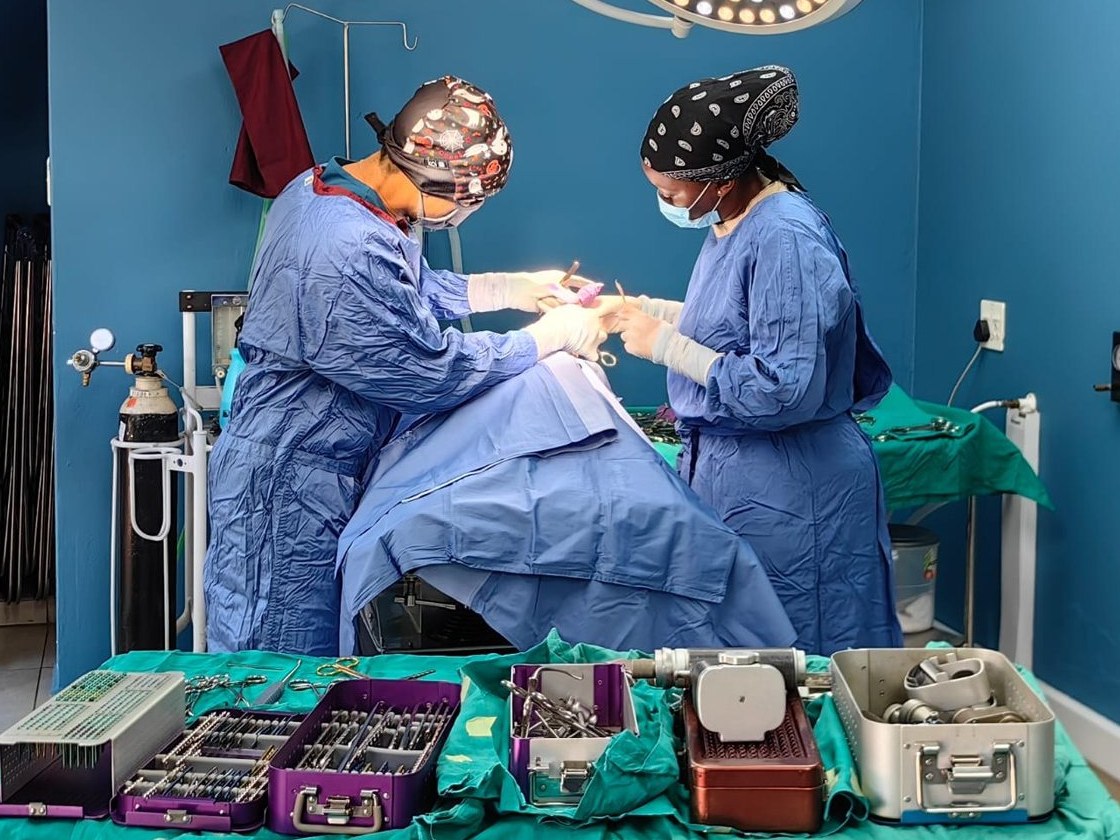
Cruciate repairs, broken bones, slipping kneecaps and spinal surgery — done here in Brackenhurst, by the vets who already know your pet.
What we operate on.
The procedures we're asked about most. Tap one to read more.
Cruciate ligament — TPLO
Tibial plateau levelling osteotomy. The bone is reshaped so the knee is stable without the torn ligament.
KneeCruciate ligament — TTA
Tibial tuberosity advancement. A different way of steadying the same knee, chosen to suit your dog's anatomy.
KneeSlipping kneecap — MPL
Medial patellar luxation surgery, to keep the kneecap running in its groove.
BoneFracture repair
Broken bones realigned and held with plates, screws or pins while they heal.
SpineSpinal decompression
Surgery to take the pressure off the spinal cord after a slipped disc.
AirwayBOAS surgery
Airway surgery that helps flat-faced breeds breathe more easily.
The limp that won't go away.
A torn cruciate ligament is the most common reason a dog goes lame on a back leg. It rarely heals on its own, and the knee wears out faster the longer it stays unstable.
We offer both TPLO and TTA. After examining your dog and taking X-rays, we'll recommend the one that suits their size, age and the shape of their knee — and explain why.
Small dogs more often have a kneecap that slips out of place (a luxating patella, or MPL). You may notice a skip or a hop for a few strides. Surgery deepens the groove and realigns the pull on the kneecap so it stays where it belongs.
Broken bones, properly mended.
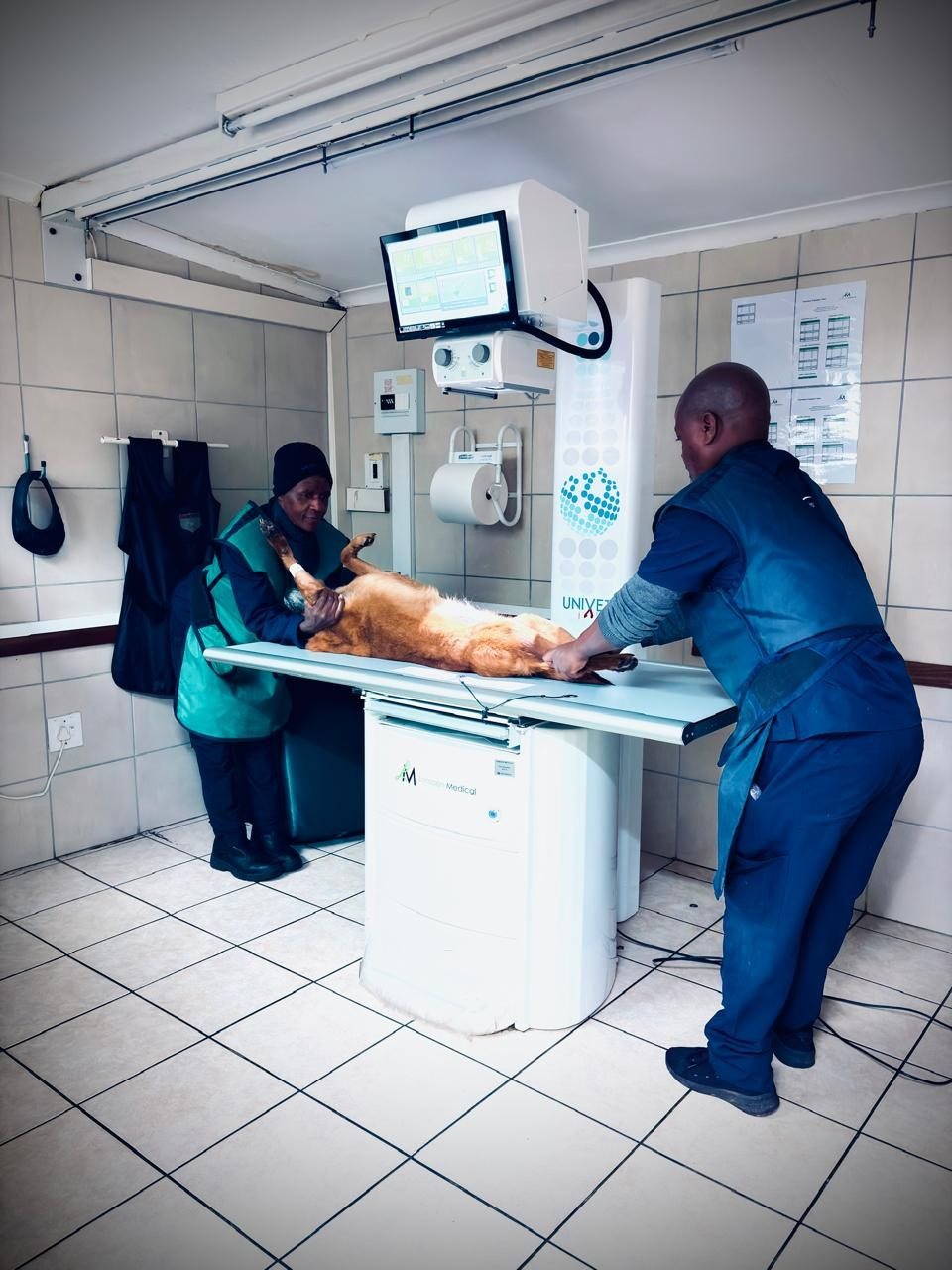
Car accidents, falls and dog fights are the usual causes. We stabilise your pet and control the pain first, then take X-rays to plan the repair.
Depending on the bone and the break, the pieces are held in place with a plate and screws, pins, or an external frame. Follow-up X-rays show us how the bone is knitting before your pet goes back to full exercise.
A suspected fracture is an emergency. Call us on 011 867 3631 or see Emergencies.
When a slipped disc can't wait.
Dachshunds, French bulldogs and other long-backed or short-legged breeds are prone to disc disease. A disc bulges or bursts and presses on the spinal cord, causing pain, wobbliness or sudden paralysis.
Spinal decompression surgery removes the disc material and takes the pressure off the cord. Timing matters: the sooner a badly affected dog is operated on, the better the chance of walking again.
We have access to advanced imaging such as MRI and CT scans, so we can see exactly where the problem is before we operate.
Helping flat faces breathe.
Pugs, bulldogs, Frenchies and Pekingese often struggle for air — the snoring and snorting isn't just a quirk of the breed. Brachycephalic obstructive airway syndrome (BOAS) can make exercise, heat and even sleep hard work.
BOAS surgery widens the nostrils and shortens the soft palate so air moves freely. Many dogs are noticeably brighter and more active afterwards, and it's best done young, before the airway is damaged further.
What to expect.
From the first limp to the last check-up, you'll know what happens next.
Consultation
A hands-on examination and X-rays, usually on the same visit, so we know exactly what we're dealing with.
A clear plan
We talk you through the options, the recovery and the cost, with a written estimate before anything is booked.
Surgery day
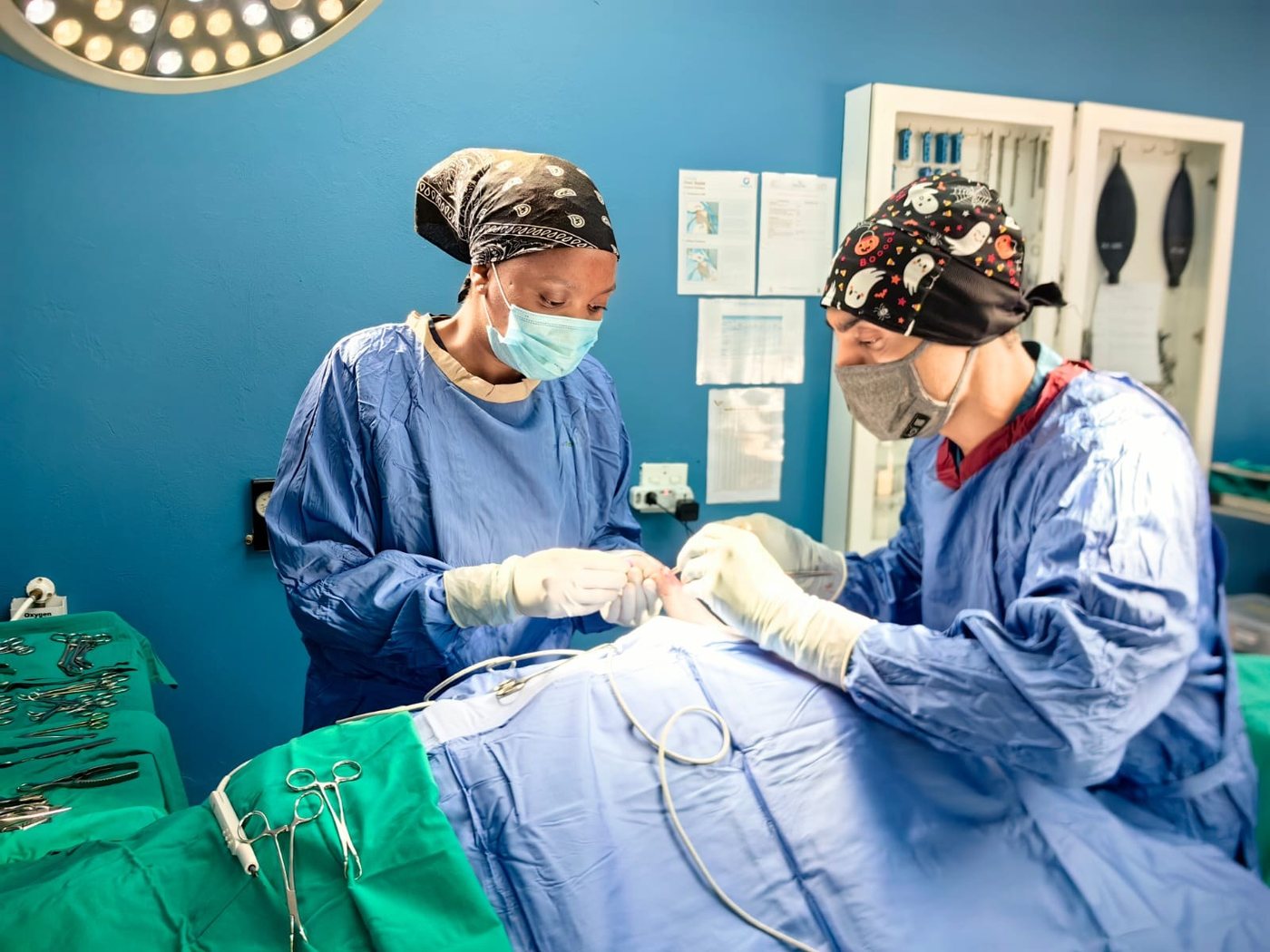
Your pet is monitored under anaesthetic and kept warm throughout, with pain relief before, during and after. We'll call you as soon as they're awake.
Recovery
Clear home-care instructions, check-ups and follow-up X-rays, until your pet is safely back to normal life.
Referrals welcome.
We gladly accept referrals from veterinary practices all over Gauteng. To discuss a case, call us on 011 867 3631 or email info@brackenhurstvet.co.za.
Worried about a limp?
Book a consultation and we'll find out what's going on.